Skip to content
Customer Story

How Kraft Heinz Turned Customs from a Cost Centre into a Competitive Advantage

Industry
FMCG & Food
Country
United Kingdom, Ireland, Netherlands
kraft heinz 3-1

We went from 45 minutes per shipment to less than 3 minutes on the UK–Ireland RGR lane, a 93% reduction in processing time.

Alejandro Lopez Rodriguez
Imports & Exports Analyst - Kraft Heinz

About Kraft Heinz

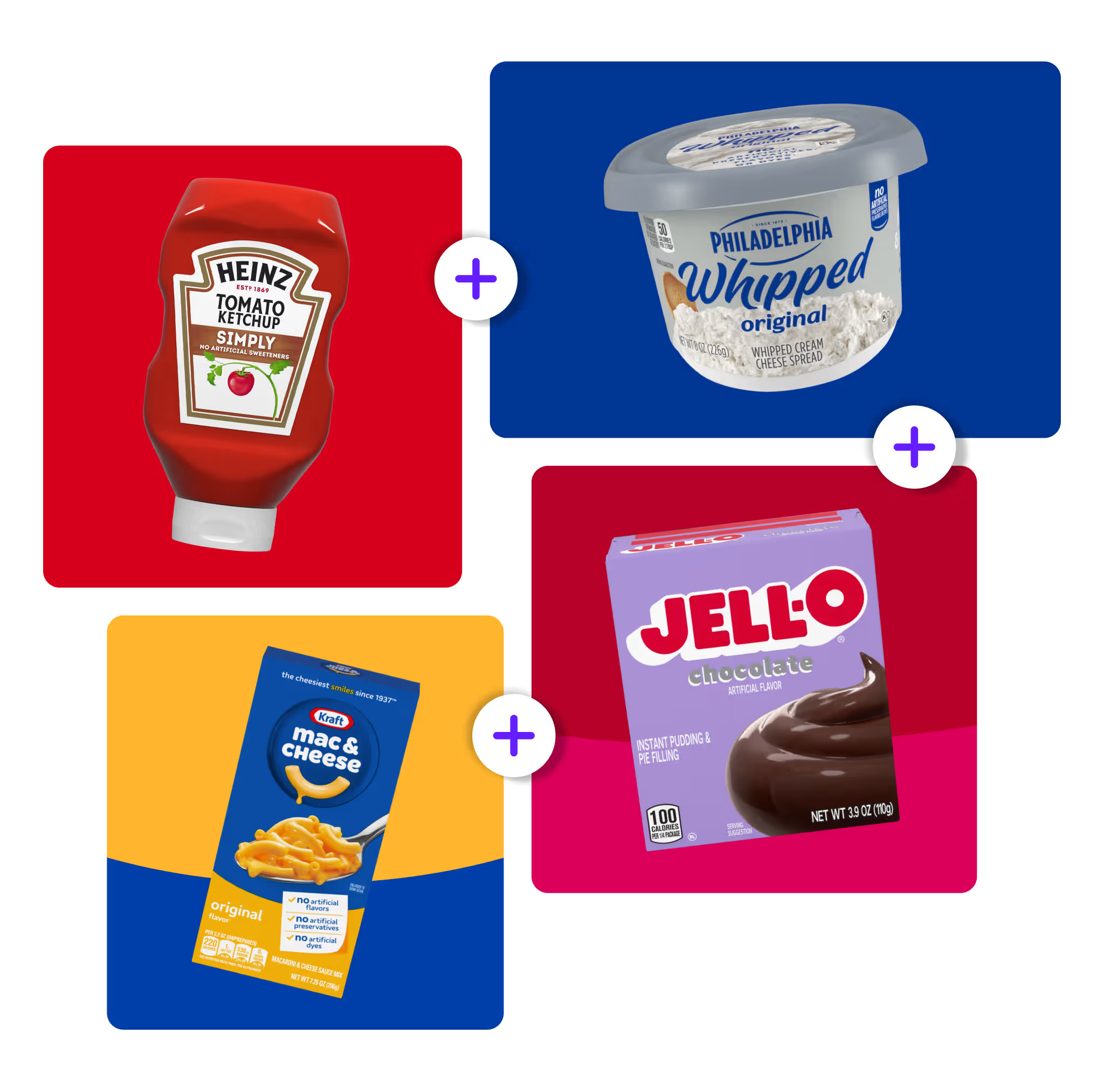
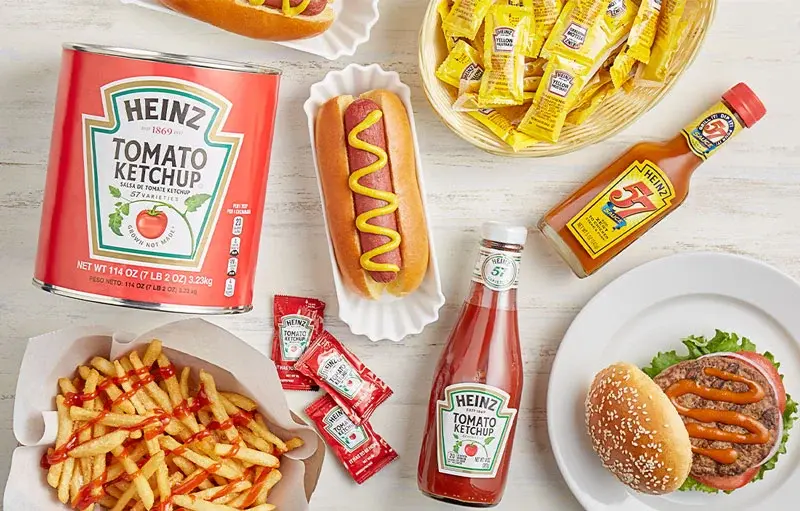
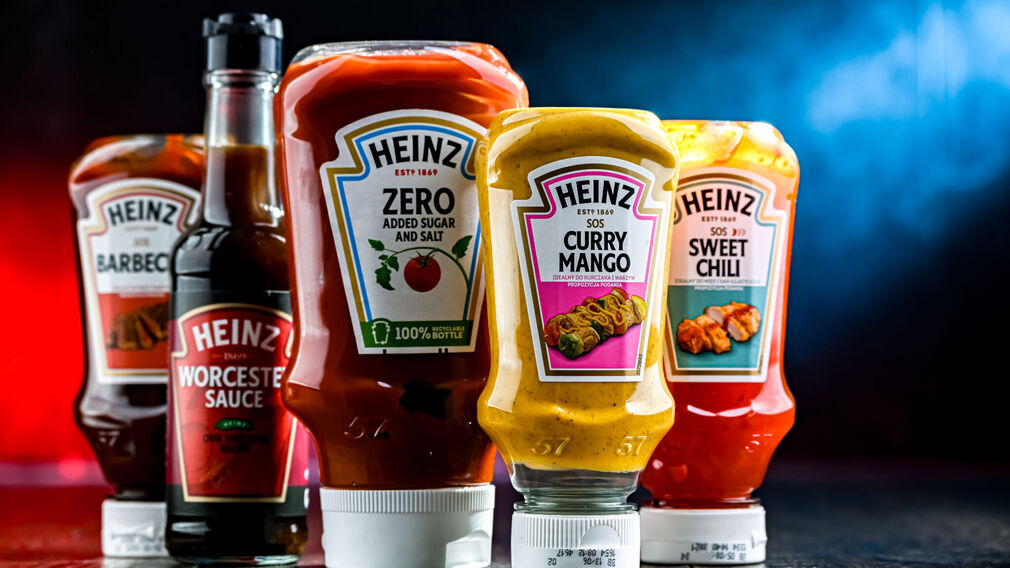
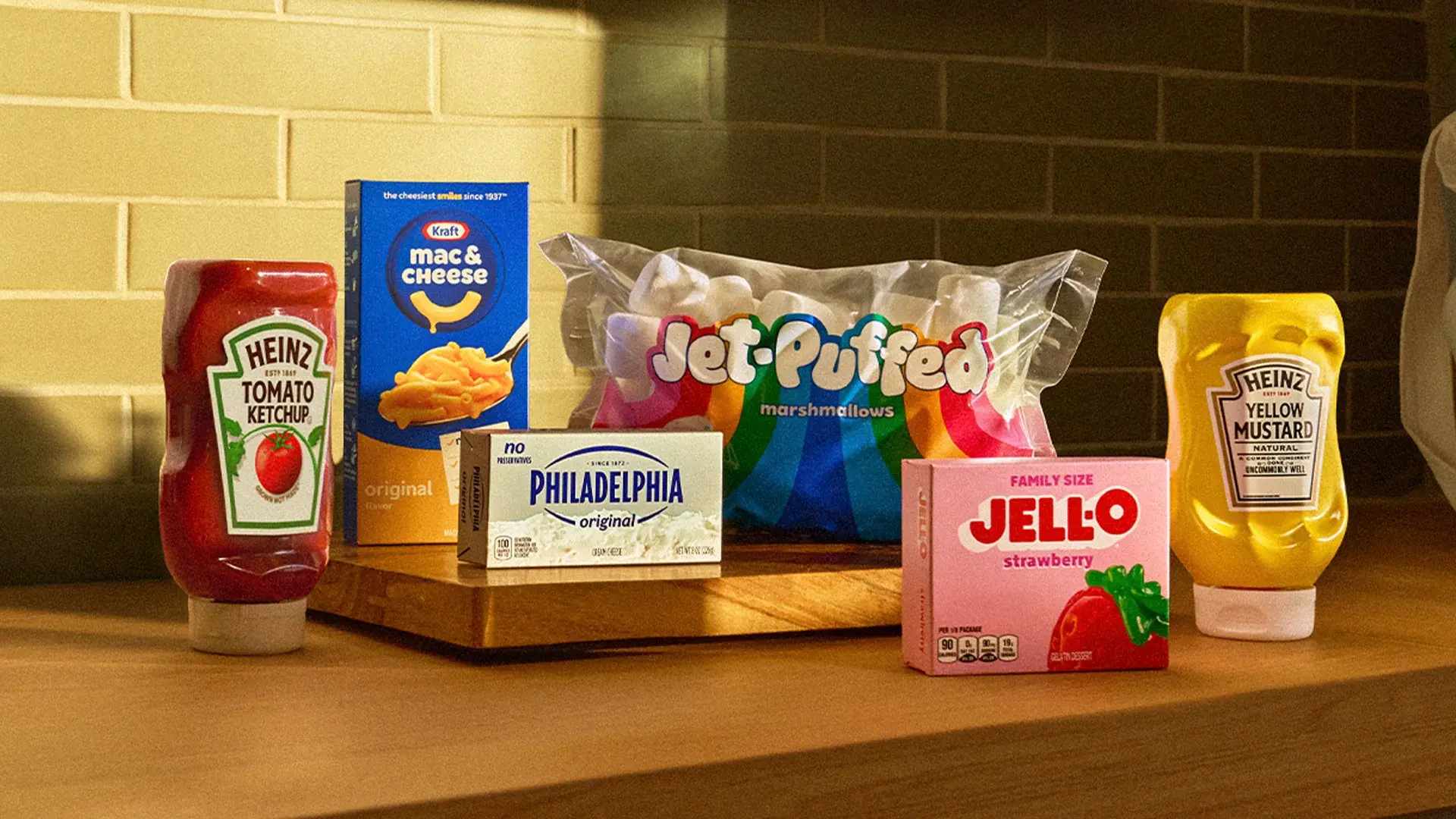
The Kraft Heinz Company is one of the world's largest food and beverage companies, with a portfolio of iconic brands including Heinz, Kraft, Planters, and HP. Across Europe, the company operates a significant manufacturing and distribution footprint, including a production facility in the Netherlands that produces 1.1 million bottles of ketchup per day. Managing cross-border trade at that scale demands precision, speed, and airtight compliance at every step of the supply chain.


kraft-heinz-heinz

The challenge: complexity without control

For a company of Kraft Heinz's scale, customs is not a back-office function. It is a direct driver of cost and competitiveness. But the processes in place were not keeping pace with operational demands.

Returned Goods Relief: money left on the table

Kraft Heinz operates a high-frequency, consolidated trade lane between the United Kingdom and Ireland. Consolidated shipments are the norm, often five or more individual consignments per truck. For each shipment, claiming Returned Goods Relief (RGR) required manually locating the relevant export declarations, matching them to import records, and assembling the full documentation trail to prove origin and status.

On average, this took 45 minutes per shipment. For a lane running on a regular cadence, the administrative burden was significant, and it had a direct financial cost. Without a complete, reliable audit trail, some claims were simply not worth pursuing. For the 2023 financial year, this meant leaving duty entitlements unclaimed. The effort required to go back and reconstruct the data outweighed the recovery value.

"We didn't have a tool at that time, and we couldn't claim every single duty because we were lacking all the documentation and data," said Alejandro Lopez Rodriguez, Imports & Exports Analyst at Kraft Heinz.

Inward Processing: manual reconciliation at scale

Kraft Heinz also operates a complex Inward Processing (IP) regime in the Netherlands. The flow runs as follows: third-country raw materials are imported and moved under transit procedure into a customs warehouse. After a holding period of up to three months, the stock is released into the factory for processing. Finished goods are then exported to global markets.

Managing this flow manually meant maintaining parallel records of physical stock movements and customs entries, reconciling Bills of Materials against consumption, and tracking the prior export equivalence process, all without a single system of record. The compliance risk was real, and the reporting overhead was growing.

The broader picture

Underpinning both challenges was the same root problem: data was fragmented across systems, brokers, and manual files. Without a centralised platform connecting imports, exports, declarations, and stock movements, the team could not work proactively. They were reactive by default, chasing documentation instead of managing compliance.

The solution: CAS as the single system of record

Kraft Heinz implemented CAS to bring structure, automation, and end-to-end traceability to their customs operations. Rather than addressing individual pain points in isolation, CAS connects the full flow from first import to final export in one platform.

Returned Goods Relief: automated evidence, end to end

For the UK–Ireland RGR flow, CAS now manages the complete evidence trail automatically. When goods are exported from the UK, CAS captures the declaration data and links it to the corresponding Irish import. The system can autonomously validate origin statements, both preferential and non-preferential, and maintain the full traceability required to support each claim.

This means that for every consolidated shipment arriving in Ireland, the documentation is already assembled in CAS before the team even begins the claim process. The INF3 form, previously required to manage the bureaucratic side of returned goods, is no longer needed. CAS replaces it with automated evidence generation, removing a significant layer of administrative work.

"What previously required 45 minutes of manual document retrieval now takes less than three minutes of data validation. The trail is there, it is complete, and it is audit ready", said Alejandro Lopez Rodriguez, Imports & Exports Analyst at Kraft Heinz. 

Next to that, CAS simplifies how the RGR department works with data, resulting in improved data quality and an approach to processes that goes beyond what regulators typically encounter. This proved to be an exceptionally advanced way of working, redefining how the company engages with customs authorities.

Inward Processing: digital stock management in sync with the factory

For the IP operation, CAS now functions as a digital twin of the physical stock in the factory. Each time an Inward Processing entry is made in the Dutch customs authority’s system DMS, the stock is uploaded into CAS. From that point, CAS tracks every movement.

As finished goods are exported, the system automatically deducts the consumed raw material quantities based on the Bills of Materials (BOMs) already configured within CAS. This means that at any point in time, the digital stock balance in CAS reflects what is physically present in the factory, without manual reconciliation.

The same logic extends to prior export equivalence. CAS automatically tracks which goods have been exported prior to the corresponding import, calculates the relevant quantities, and declares the data accordingly. This removes a process that previously required significant manual effort and broker involvement.

The result is a fully traceable IP operation: from the moment raw materials cross the border to the point finished products leave for global markets, every step is captured, linked, and reportable in CAS.

One platform, multiple flows, full visibility

What makes CAS particularly valuable for Kraft Heinz is not any single feature. It is the fact that all flows are managed within the same system. UK exports, Irish imports, Netherlands IP entries, customs warehouse movements: all connected, all visible, all auditable from one place.

This centralisation changes what is operationally possible. The team no longer needs to chase data across brokers, spreadsheets, or legacy systems. Reporting that once required significant manual input is now generated directly from CAS. Audit readiness, previously a reactive exercise, is now a permanent state. 
kraft heinz

The results

The impact of CAS at Kraft Heinz is measurable across time, cost, and compliance.

The most immediate gain was on the UK–Ireland RGR lane. Processing time per consolidated shipment dropped from approximately 45 minutes to less than 3 minutes, a 93% reduction. The team no longer searches for documentation; they validate data that CAS has already assembled. "We went from 45 minutes per shipment to less than 3 minutes on the UK–Ireland RGR lane, a 93% reduction in processing time," said Alejandro Lopez Rodriguez, Imports & Exports Analyst at Kraft Heinz. "CAS assembles the full documentation trail automatically. All we need to do is validate that the data is correct." At the volumes Kraft Heinz operates, that time saving compounds quickly across the calendar year.

Alongside the time saving came a financial one. Because CAS holds the complete audit trail for every shipment, Kraft Heinz can now submit every RGR claim it is entitled to, without exception. For the 2023 financial year, incomplete data meant some entitlements were left unclaimed. That is no longer the case. "For the first time, we can capture 100% of the duty relief we're entitled to," said Alejandro Lopez Rodriguez, Imports & Exports Analyst at Kraft Heinz. “Moreover, CAS delivered an 85% reduction in costs on the RGR flow. The shift from partial recovery to 100% duty capture combined with the use of customs software represents a direct and recurring saving.”

The removal of the INF3 form was a further efficiency gain that is easy to overlook but significant in practice. By automating origin evidence, CAS eliminated the need for this administrative step entirely, reducing overhead and shortening the relief process on every shipment.

Beyond the RGR flow, bringing the UK market in-house through CAS also delivered substantial savings. By lodging double filing declarations from the EU to the UK with a single, automated message, Kraft Heinz achieved an 84% reduction in costs for the UK customs flow. Managing this in-house through CAS, rather than through external brokers, removed both the cost and the dependency that came with it. "Taking the UK market in-house was a big step," said Alejandro Lopez Rodriguez, Imports & Exports Analyst at Kraft Heinz. "With CAS handling the declarations automatically through a single message, we no longer need to rely on brokers for this flow. The cost reduction of 84% speaks for itself."

On the Inward Processing side, the results are equally tangible. CAS keeps the digital stock balance in continuous sync with physical factory movements, driven by BOM-configured deductions on every export. Manual reconciliation no longer exists as a task. The same applies to prior export equivalence: CAS tracks, calculates, and declares the relevant data automatically, removing a process that previously required both manual effort and broker involvement.

Taken together, the most transformative outcome is audit readiness. "The automatic flow that CAS delivers means the system simulates the physical stock digitally at all times," said Alejandro Lopez Rodriguez, Imports & Exports Analyst at Kraft Heinz. "Every export, every deduction is handled automatically. We have instant audit readiness and 100% data available at any moment." All customs data, declarations, stock movements, origin statements, and export trails, is held in CAS in real time and accessible at any moment. 

The future of customs at Kraft Heinz

With the core flows automated and the compliance foundation in place, Kraft Heinz is focused on expanding its use of CAS to cover more markets and more procedures.

Centralised clearance is on the roadmap. France and the Netherlands have both been identified as ready for implementation, pending AEO authorisation. Once in place, centralised clearance will allow Kraft Heinz to manage declarations across multiple countries from a single entity, further reducing complexity and cost.

As new markets are brought into scope, CAS provides the platform to onboard them without rebuilding processes from scratch. The data infrastructure, the BOM configurations, and the customs logic are already there. Expansion becomes a matter of connecting new flows to an existing system, not starting over.

"With the automatic flow that CAS delivers, we no longer have to chase documentation. The data is there. And we can keep building on it," said Alejandro Lopez Rodriguez, Imports & Exports Analyst at Kraft Heinz.

p-1-91577514-kraft-heinz-partnership

Every export, every deduction is handled automatically. We have instant audit readiness and 100% data available at any moment.

Alejandro Lopez Rodriguez
Imports & Exports Analyst - Kraft Heinz
Discover more

Accelerate with CAS

Designed to simplify customs management for organisations, CAS is a comprehensive solution that automates customs and excise processes. Start with the functionality that will provide your company with the most immediate automation, value and add-on modules as you grow to optimise your customs operations.

C4T-Tier2 Icon-Minimise Payments-SMALL

Cut costs

Save up to 80% on customs management and minimise customs duty costs.
C4T-Tier2 Icon-Onboarding-Cerise-SMALL

Accelerate your Supply Chain

Remove border delays and cut release times from hours to minutes.
C4T-Tier2 Icon-Compliance-Dark Blue-SMALL

Strengthen Compliance

Ensure compliance with industry-leading data quality and audit-ready reports.

C4T-Tier2 Icon-Minimise Payments-SMALL

Cut costs

Save up to 80% on customs management and minimise customs duty costs.
C4T-Tier2 Icon-Onboarding-Cerise-SMALL

Accelerate your Supply Chain

Remove border delays and cut release times from hours to minutes.
C4T-Tier2 Icon-Compliance-Dark Blue-SMALL

Strengthen Compliance

Ensure compliance with industry-leading data quality and audit-ready reports.